Tracing Data Pathways from Registration to Self-Exclusion Activation in Mobile Casino Platforms
Logan Hartmann · Aug 25, 2026
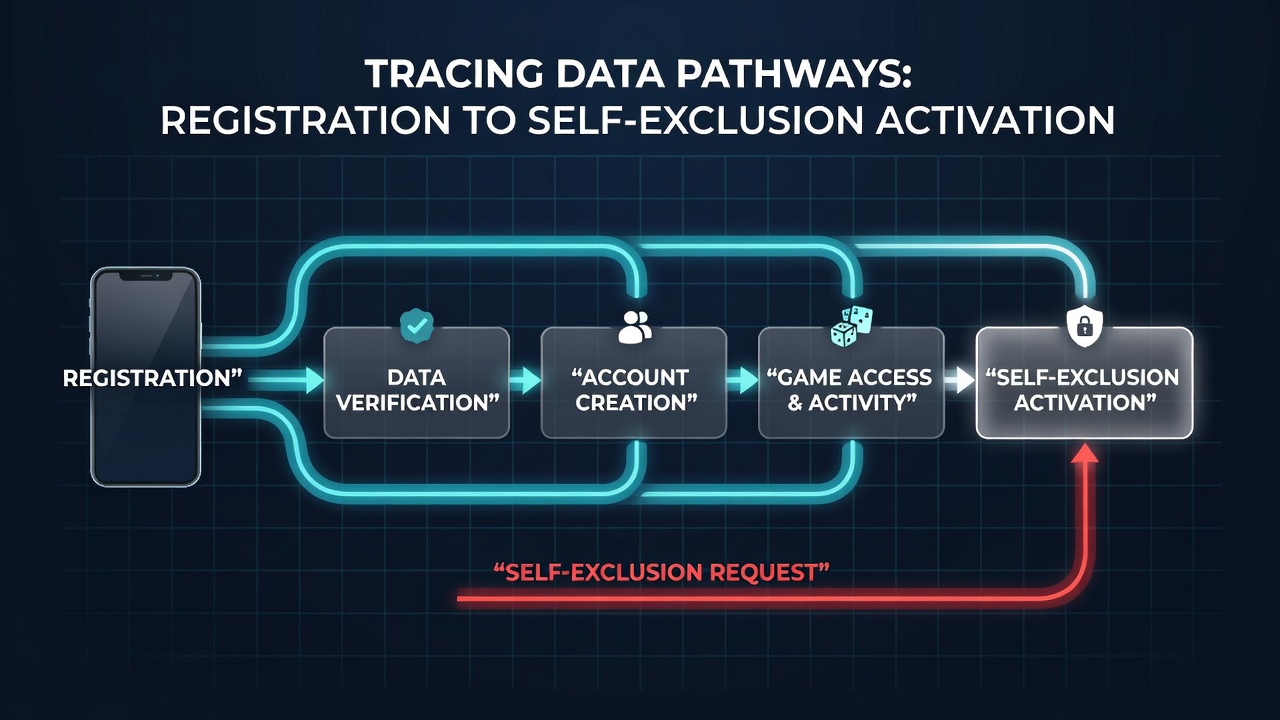
Tracing Data Pathways from Registration to Self-Exclusion Activation in Mobile Casino Platforms
Registration on mobile casino platforms begins with users submitting personal identifiers that include name, date of birth, address details, and contact information through secure app forms, and these initial data points enter centralized databases where they undergo immediate validation against external identity services before any gaming access gets granted. Systems then generate unique player profiles that link across multiple tables in relational databases, allowing operators to track subsequent interactions from the first login onward while maintaining compliance with regional data protection standards.
Initial Data Capture and Profile Creation
Users provide government-issued identification documents during signup, and platforms employ optical character recognition alongside API connections to credit bureaus or identity verification providers to confirm authenticity, which creates a foundational record that includes device fingerprints, IP addresses, and geolocation data collected at the point of entry. This early dataset forms the basis for all future pathway tracing since every transaction or session logs back to the original profile through hashed identifiers that preserve privacy while enabling cross-referencing.
Verification Processes and Ongoing Monitoring
Once basic registration completes, automated checks compare submitted details against public records and watch lists maintained by financial intelligence units, and platforms such as those operating under oversight from the National Council on Problem Gambling integrate these results into risk-scoring algorithms that flag potential discrepancies for manual review. Activity logs accumulate rapidly after verification, capturing bet amounts, session durations, deposit patterns, and withdrawal requests that feed into analytics engines designed to detect behavioral shifts indicative of problem gambling.
Researchers have documented how these monitoring systems employ machine learning models trained on anonymized historical datasets to establish baseline activity norms for each profile, and deviations trigger alerts that route through internal compliance teams without interrupting user experience until thresholds get crossed. Data flows through encrypted channels between the mobile app front end, backend servers, and third-party analytics services, ensuring real-time updates reach decision-making modules.
Transition to Self-Exclusion Triggers
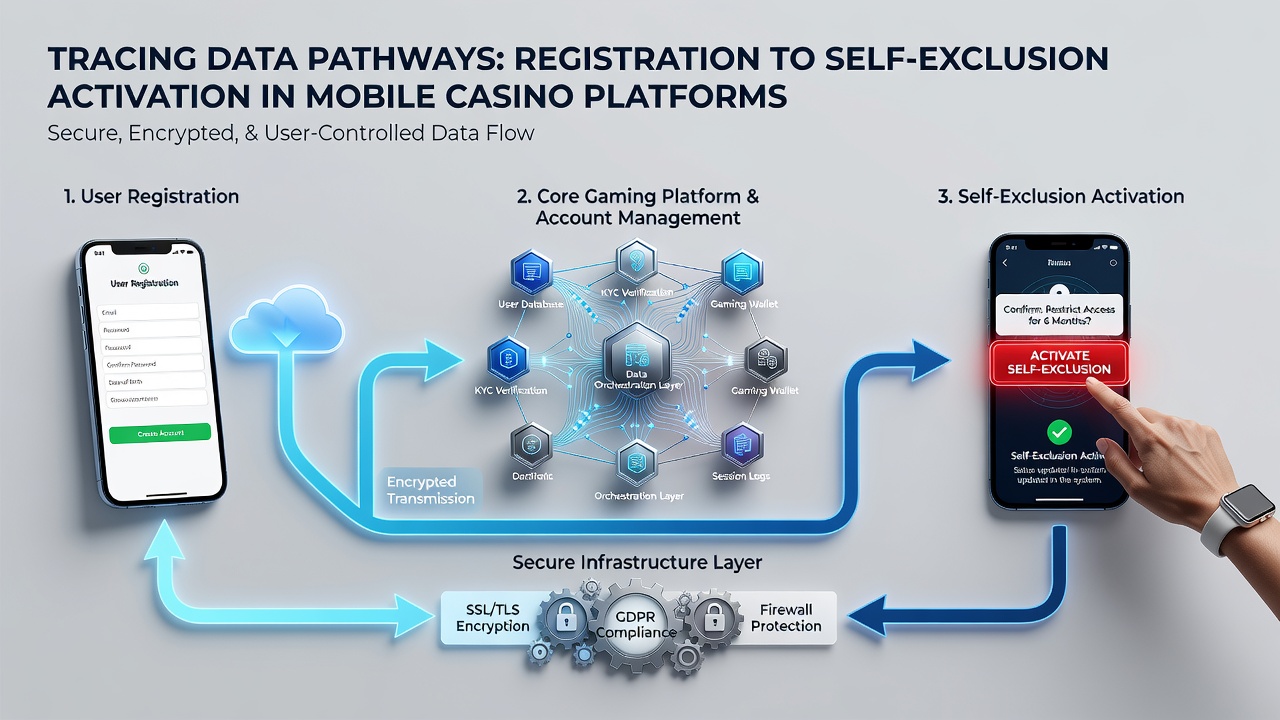
Self-exclusion activation occurs when accumulated data matches predefined criteria established by platform policies or external regulatory requirements, and the pathway involves a sequence where behavioral analytics outputs feed directly into exclusion management modules that update user status flags across all connected systems. Operators coordinate with national registries in jurisdictions such as those aligned with the Canadian Centre on Substance Use and Addiction guidelines, allowing a single exclusion request to propagate through shared databases that block access at multiple operators simultaneously.
Technical implementations rely on event-driven architectures where a self-exclusion request submitted via app or customer support initiates a cascade of database writes that lock account functions, notify linked payment processors, and log the event with timestamps for audit purposes. Data pathways here emphasize irreversibility during the exclusion period, with retention schedules governed by local laws that dictate how long records remain accessible for verification against future registration attempts.
Technical Architecture and August 2026 Developments
By August 2026 several platforms plan to adopt enhanced interoperability standards that streamline data exchange between registration systems and self-exclusion registries, reducing latency in activation from hours to minutes through standardized API protocols. These updates build on existing infrastructure that already routes information via secure virtual private networks and blockchain-based audit trails in select markets, allowing observers to trace every data movement from initial capture to exclusion enforcement without compromising user confidentiality.
Case examples from large operators reveal that integration with external credit monitoring services adds another layer where financial distress indicators can accelerate exclusion reviews, yet final activation decisions always rest with the combination of algorithmic thresholds and human oversight protocols. Observers note that such layered approaches minimize false positives while ensuring genuine cases receive prompt attention across mobile environments where users frequently switch devices.
Conclusion
The complete pathway from registration to self-exclusion activation demonstrates how mobile casino platforms manage continuous data streams through interconnected systems that prioritize both operational efficiency and regulatory adherence, and these processes continue evolving with technological advances scheduled for implementation around August 2026. Accurate tracing of each data element ensures that self-exclusion functions operate reliably when needed while supporting broader responsible gaming frameworks across different regions.